Wednesday, July 4, 2012

Interview

Hi All, this week I decided to interview a couple of the new M.Sc students here at JUCAVM in lieu of the usual update. It's a short discussion meant to give the reader perspective on the students' motivation behind studying Post-Harvest Management, the need of such programs in Ethiopia, and their ideas on what they can do to solve agricultural problems. Enjoy!

Manny


Jimma University College of Agriculture and Veterinary Medicine. July 3, 2012.
Gerefa Sefu and Misale Kuru

Mannfred: First off, what is meant by Post Harvest Management, what does it entail?

Gerefa: Post Harvest Management is essentially the control of crop losses from the ‘farm to the fork’. Controlling any losses. 

Mf:  So what sorts of activities define Post Harvest Management? 

Misale: I think it’s a process, it’s not one activity or another. It starts at the harvest and continues until it reaches the customer or consumer. It involves, after harvest, anything like pre-cooling, cooling, packaging, processing, whatever is needed. It’s a long process, keeping the quality of food products.

Mf: Why do you think PHM has been identified as such an important issue? Why not pre-harvest management?

G: I think Post Harvest Management is ‘Pre-Pre-Harvest Management’ [laughs] because when there is no Post Harvest Management, there are no good pre-harvest contributions. If Post Harvest Management fails, everything before it does as well.  So, Post Harvest Management is the mother for all Ethiopia. 

Mf: How can PHM improve the lives of Ethiopians at both the local and national level?
Ms: You can see after farmers produce a crop, when it gets to a market it’s already deteriorated. If we can help them to handle their products correctly or practice the right types of management after harvest, they can boost their crop sales and also profits. If they contribute to the growth of their hometown economy and feed themselves and their families, then you can say the country as a whole is developing. After that, we can start to extend our market to the international level. 

Mf: What does modern Post Harvest Management research include? 

G: Modern Post Harvest Management includes extending the shelf-life of perishable commodities and products. This means modifying storage facilities and proper handling. This is the modern concept of Post Harvest Management. 

Ms: It’s a broad question, it can include a lot of different research. We can develop packaging, we can develop storage conditions…the main idea is to strengthen the shelf-life of the products. 

Mf: So does this mean a focus on laboratory or field work? Is there one that seems to be dominating in modern Post Harvest Management research? 

Ms: Both ways. We can do food fortification or food preservation in the lab, also storage research or packaging materials. At the same time people are doing their research in the fields. We collect data from both areas. 

G: Post Harvest Management is very broad. So, it’s not defined by the field or the lab. First, we find where the problems are and the location is secondary.  

 Mf: So this is about you guys. What are your PHM research interests? What will you be doing during your Master’s degree? 

G: My project will be on the mango fruit, extending its shelf life through waxing. I’ll be using essential oils extracted from cinnamon, clove, and ginger.  I’m hoping to make a contribution to society. Mangos are produced only in one season a year for the whole market. After that, they disappear. So, to improve the presence of that fruit in the market we need to extend its shelf life. We can use different mechanisms including good storage, packaging, atmospheric modification, and also through waxing. 

Mf: So does waxing prevent oxidation, pests, or something else? What is the main purpose of waxing? 

G: Waxing is very important for preventing oxygen from entering the fruit. If oxygen enters the mango, it creates favourable conditions for microorganisms, fungus, bacteria. If you prevent oxygen from entering, you can deter these things. So, the rate of production and shelf-life is increased and more mangos are available for longer durations in the market. 

Ms: My work will be with oranges. In modern times oranges are lost in Ethiopia due to diseases. I’m identifying these pathogens and why they’re attacking oranges. Part of the M.Sc program includes a plant pathology course so I’ll be working with plant pathologists studying Colletotrichum spp. and anthracnose diseases. 

Mf: When Suze and I were in Addis Ababa we noticed lots of different types of fruits. Is fruit being produced primarily in one part of the country or are they coming from all over?

Ms: They’re coming from everywhere.  If they’re produced outside of Addis or some urban area, they’re brought to the market. That means if you’re in one of these centres, you can find oranges anywhere. The problem right now is bringing the products across the country. 

G: Mangos are being produced in the West and South of Ethiopia. Asosa, Jimma and other Southern parts of Ethiopia too. They’re being brought to these urban areas, but there are losses associated with this transport.

Mf: As Ethiopians and students of agriculture, what do you identify as the most pressing issues in Post Harvest Management? 

G: I think the number one problem is connecting all the Post Harvest Management controls. So, connecting technology and knowledge. The harvesting, handling, and processing process especially is not done correctly, over 50% of losses are coming just from harvesting. In the market, storage is a real problem. Technology needs to be incorporated into the storage, handling, and harvesting systems. 

Mf: Can you think of a good example of how harvesting technology could be used to reduce that 50% loss?
G: Yeah, a simple technology is being used for mango fruit collection. There are a lot of losses because the fruits hang so high from the trees and become damaged when they fall. So, they need to be harvested without injuring the fruit and technology has improved this. The harvesting basket is simple, but effective.

Mf: How does the harvesting basket work?

G: It’s just a basket with a hook to cut the fruits from the tree. The basket is designed with materials that prevent damage to the fruits. It’s much better than landing on some hard surface like the ground. 

Mf: And Misale, what do you see as the most pressing issue in Post Harvest Management? 

Ms:  I agree with him but a new problem is the know-how. If the resources are available but the people don’t know how to use them, then there are no improvements. They need workshops to show them the best way of using what is available to them. The focus should not just be on new technology but how to use what they already have. It’s a major problem for rural farmers. 

Mf: Farming methods in Ethiopia are often passed down over generations and hold a traditional value. Do you think if university or government agencies try to teach farmers new methods, they will accept or reject them? 

Ms: I think they like modern concepts, but the problem may be that what they are being taught requires some costly equipment, or they do not know how to use such equipment. They may also not understand the importance of some machine, or think it will damage their soil for example. If we teach them before they are in the field, then there is no problem. 

Mf: So do you think Ethiopia needs these new, better technologies, or to use what they have better? What do you see as more effective? 

G: I think if technology is developed that is good, but we have become economically relevant with what we have so far. I think we need to focus on small things first: processing and handling. These things can be improved without much improvement to our existing technologies. 

Ms: What he said is right, we need to maximize the use of what we already have first. 

Mf: What do you see for the future of Ethiopian agriculture?

Ms: I can see that in the past five years we’ve developed our agriculture quickly. I’ve witnessed it. Our future is good; we will be able to export our fruits and vegetables on the international food market. Students like us, the next generation, will be able to do something better for the country. 

Mf: What will be the major agricultural products coming from Ethiopia? 

Ms: Coffee! For sure. Everyone already knows Ethiopia for its coffee.

G: In the future we’ll be exposing our products to other countries, even Canada. Mangos, coffee, bananas. I’m expecting this in the future. 

Mf: Do you have any concerns that Ethiopia will begin to export its products before it has taken care of its own people? 

G: Yes that’s an issue. It’s a matter of organization. As of now, Ethiopia is exporting raw materials and importing the processed product. We’re buying our own products that have been processed. For example, we have oilseed plants here for making our own oil, but instead we buy our oil from foreign countries. We export oilseed from Ethiopia and then buy the oil. By producing our own product we could provide for our own society and sell the extra products to the international market. So…it’s possible.

Ms: I think it’s possible. That’s one of the goals of Post Harvest Management. With some effort we should be able to feed ourselves and access international markets. Management should be so good that these things are made possible. The problem is the losses; we produce a lot, but we also lose a lot. If Post Harvest Management is improved we can do both.  

Misale Kuru, 1st Year M.Sc in Post Harvest Management, Jimma University
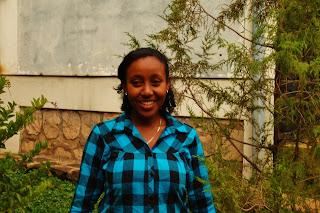


Gerefa Sefu, 1st Year M.Sc in Post Harvest Management, Jimma University


**Also, this just in, Suze has made attempt #2 at making some Injera. Photo evidence soon to follow.


Thursday, June 28, 2012

Cooking Lesson


We’ve mentioned before that our consumption of food in Ethiopia has been very different from our normal diet. This starts off with the most important element of Ethiopian cuisine, injera. Injera as described before is like a giant pancake that is cooked on one side while the other side resembles a sponge. It has a slightly acidic taste like sour dough and the average Ethiopian eats injera about twice a day. Upon arriving in Ethiopia I had been told I would eat a lot of injera but I don’t think I really understood that it would become a staple in my diet. Now saying this I can tell you that I have reached a point where I can identify good injera from bad injera or at least my preferences. I had the chance the other day to try my hand at cooking injera.
The job of cooking in Ethiopia still remains primarily in the hands of the women, finding a male in this country who can cook is rare (at least most can make pasta but thats like saying you can make Kraft Dinner at home). I asked my friend Eleni from the Post Harvest class if she could show me how injera is made.  Mannfred and I headed over to Eleni’s with a few of the other girls from the PHM class. First I was shown how to perform the traditional Ethiopian coffee ceremony starting from roasting the beans and using the traditional Jam^&*( to brew the coffee. My coffee didn’t turn out half bad but with some help from Beza while Manny and Misale ate popcorn and watched the magic happen. We also enjoyed a wonderful lunch that Eleni made which really showed us how different a meal can be when its homemade. We have primarily been eating our meals from restaurants where the injera is made in large commercials batches while the meal we had at Eleni’s was much tastier and the injera much softer. Its like comparing homemade rolls to Ben’s bread.
After lunch, I got my first attempt at making injera. To start injera is very basic with the main ingredients being water, tef flour and yeast and then the mixture needs to sit and ferment for approximately three days. On the third day, additional water is added to create a batter similar to pancake batter. A large grill (the name I cannot remember because its Amharic) is used for cooking the Injera. Eleni showed me the technique for pouring the batter on the grill which didn’t seem too challenging until I tried it myself. Like the young girls I was given the last bucket of mix and tried to pour my circle of injera, it proved to be very tricky where you need to pour quickly in a perfect circle. You don’t want it too thick in places because then it won’t bubble properly but you also don’t want holes in your injera which is exactly what happened to mine. Mannfred’s comment about my holey injera was that “its only good enough for firfir” which is a common dinner time item of broke pieces of injera and lots of spices. I’ll be making my second attempt at making Injera in the coming days and hopefully it will turn out slightly better. At least for now I have a good line for the guys that I would make a terrible wife because my injera is bad.
Thats all for now.
Suze
Coffee Ceremony with some help from Beza

My roasted beans

My injera with lots of holes in it.

Manny and some konjo (beautiful) girls


Sunday, June 24, 2012

Journey Out of Jimma Part II

Indeed I should have heeded Suzie's advice about Gravol on the road to Addis. Lesson learned.
As Suzie mentioned, we visited American/Dutch/Ethiopian managed Genesis Farms. The operation was unlike anything Suzie and I have seen our entire visit. Every aspect of the farm had been carefully managed to maximize efficiency. Seed germination greenhouses, watering schedules, and packaged dairy products at the farm's own grocer were just some of the features that the farm boasted. It was most impressive to see how a few simple steps could improve the quality and quantity of a farm's output. More about the farm can be found here: http://genesisethiopia.com/
On our last day of our trip we caught a ride from Bishooftu to Addis while Tilahun dropped off Dr. Debele (JUCAVM professor of Environmental Science) at a bus station. Unfortunately for us this meant a 4:45am wake up call, and driving around Addis for a couple hours waiting for a restaurant to open for breakfast. We couldn't help but wonder how on earth the bus system works here. From our perspective it seemed as though we drove to a parking lot full of buses (and lots of food vendors) while Dr. Debele hopped out to find a bus to Jimma. No signage, no clocks, no ticket booths. If we ever need to take a bus somewhere we're going to need much better Amharic!
As the city woke up we took a visit to some old relatives at the Ethiopian National Museum. On the upper floors we got to check out a wide variety of ancient Ethiopian artifacts: tools, dishes, thrones, paintings..you name it! But what we were really excited to see were the bones of the many hominids (relatives of humans, more so than chimps) that have been unearthed here in the last century. Most notably, a molded replica from the remains of 'Lucy' (Australopithecus afarensis), a partial skeleton discovered in the Awash Valley in the 70's. The remains are apparently over 3 million years old and represent an important step in humans' evolution. A wealth of information on Lucy can be found all over the web, but here's a good overview for those interested: http://news.nationalgeographic.com/news/2006/09/060920-lucy.html
We finished off the morning by touring around Addis with Tilahun. It's really quite a city. Development everywhere; condos, office buildings, industry. In parts of the city we noted a stark juxtaposition between the rich and poor, where mansions on a hillside overlooked a sea of slums. Many people here comment on the widening gap between the wealthy, middle class, and impoverished. The future of the capital's society and culture is surely at an important crossroads. Addis is a city to stay tuned to for sure!
That's all for now, we're back on JUCAVM campus until our journey to the North.

Ciao!

Manny

Addis Ababa from Mount Entoto, 3km Above the Sea

 Impressive Greenhouses at Genesis Farms

Great Aunt Lucy 


Saturday, June 23, 2012

Journey Out of Jimma


Well it may appear like Manny and I have fallen off the face of the earth but in reality we escaped Jimma to explore more of Ethiopia. We were very lucky this week because Professor Solomon and the dean of JUCAVM and another professor were headed out of town to three days of meetings to present a project proposal. They realized that we’ve been getting antsy to get out of Jimma and brought us along to explore. The journey began with an early morning departure for the long 6-7 hour journey to Addis Ababa. The drive is an incredible drive down a perfect road through the mountains, the Gibe valley and passing through the rural villages watching people plow fields and work their fingers to the bone. The road zigzags through the mountains and can be rough on the tummy as Mannfred learned the hard way. Perhaps next time he’ll take my advice about gravol because he had the pleasure of enjoying breakfast twice along the trip.
Our afternoon in Addis started by dropped off the dean at the Netherlands Embassy and we continued to do some touristy things like visiting Mount Entoto the highest peak that looks over the city of Addis. We saw one of the first Orthox churchs, the Palace of King Menelik and Taitu as well as the incredible  view  of the city. Remember we’re at the top of a mountain and approximately 3000m above sea level and once again Mannfred and I can feel the drop in oxygen level as we panted everywhere we walked. My camera even recognized the height change and automatically went to airplane mode (isn’t that telling).
We continued from Addis to a small town about 45 minutes away (depending on traffic) called Debrezeit also known as Bishooftu (recent name change) which is where the meetings would be taking place in the following days. Once settled into our hotel Mannfred and I couldn’t help but laugh at the design of my Austin Powers suite. I had sweet gold bed covering, blue and pink curtains, 70’s style upholstered chairs, a lava lamp and a drawer full of contraceptives and candles.
During our days when the professors were in meetings we did some touring around with our driver Tilahun. Tilahun’s English is rough but my Amharic is even rougher, needless to say we spent a good portion of the time having language lessons and I’ve learned the most important phrase yet, “I don’t know”. Tilahun drove us around Bishooftu where we got to see some of the many lakes in the area which Mannfred realized is the first time we’ve seen a large body of water since leaving home. We also visited a large farm which is extremely developed and has poultry, dairy and plant sections where they produce their own yoghurt and pasteurized milk as well as a small grocer where they sell all their fresh vegetables. It was quite an impressive operation to see. One of our favourite  things we did in town was visit the Lemma Guya Art Center. This was so cool to see because I’ve primarily been exposed to western art techniques and the style of the artist brought in some folksy elements but at the same time remaining quite realistic. The majority of the paintings were done on animal hide and he used the fur on the hide as a way of texturizing the clothing in the painting while removing the fur where faces and arms were. It also became apparent in the art how much he love his country with the focus of the paintings either being on a geographical or cultural element of the country or a famous or influential person in Ethiopian history whether it was a painting of Aba Jaffar or Haile Gebreselassie.
Not only did Mannfred and I get to explore touristy sites but we were also able to visit some supermarkets which may sound pathetic but it was super exciting for us and we made our first purchase of Peanut M&Ms since being in Ethiopia. Our excitement level was through the roof. Stay Tuned and Mannfred will fill you in on the remainder of the trip.

Suze
View of Bishooftu Lake

Can you see how big the tree is?

A painting from Lemma Guya of the harvesting of tef which is used in Injera

Excited about Peanut M&Ms!!


Monday, June 11, 2012

Out and About


Welcome back! Suzie and I had a busy weekend and finally got out of ol' Jimma town with some of the Post Harvest Management graduate students and Prof. Solomon. Saturday we woke up bright and early and hurled down a bumpy backroad to Seka Falls (~35km outside of Jimma). The drive was treacherous at times but with lots of interesting sites along the way. There is a surprising amount of highway construction, and we stopped in a small town market where we were met with the usual chorus of "Farenji! Farenji!" (Foreigner! Foreigner!) ) and "You! You! You!”. It's always fun interacting with locals and trying out some Amharic greetings that we've polished enough not to butcher. Suzie and I exchanged some worried glances as the car approached our destination; we slowly descended down a steep narrow path to the falls best described as 'off-road'. There were times when I almost spoke up to say we would walk the rest of the way,but alas I figured the driver had made the trip many times before.
The next day we headed to Abba Jafar Palace, an old wooden palace built for King Jafar in the late 19th century. The palace sits atop a mountain just outside urban Jimma and boasts a beautiful view used in those times as a strategic military lookout. The grad students held King Jafar in great regard as they recited his height, weight, and number of wives and children. His reputation almost has a mythical twist to it! Suzie pointed out that this building has been the first wooden construct we've noticed, something common in Canada but rare here in Ethiopia. The palace incorporated designs influenced from traditional Ethiopian, Indian, and even some French metal work. On the walk down the mountain we got to take in the great view, and enjoyed the serenades of the grad students who love singing as well as debating over their favourite Ethiopian pop tunes. One thing we always laugh about is that Ethiopians invest a lot of emotion into their conversations. Whether it be ordering food or arranging meeting times, a brief heated argument always precedes any sort of decision!
Well, the Euro Cup has kicked off and the campus is again cheering into the night as England takes on France. Lively nights are surely ahead! We are (hopefully) heading to Northern Ethiopia in the coming weeks so we’ll fill you in as the time approaches.  

Ciao,

Manny
 

 Backroads on the way to Seka Falls (widened for new construction)
 

Kids hangin' out at a market in Seka

 Abba Jafar Palace


Thursday, June 7, 2012

Cabin Fever and Bajaj Rides


The definition of normal has certainly proven to be a relative thing. We’ve started describing things as normal and then realizing that its our “Ethiopian Normal”. Amazingly enough, we’re a third of the way through our time here but we’ve also started showing some signs of cabin fever. At home I always think of cabin fever hitting during the snowy days but with the rainy season in Ethiopia I can say we’ve got a mild case of cabin fever.
We’ve found ourselves somewhat trapped indoors while the rain beats down and knocks the power out. Friday night the lights were out early and out for the night. The heavy rain the other day even brought ice pellets which was certainly a surprise.  Mannfred and I have found ourselves on many occasions sitting eating our supper in the dark. It poses some difficulties finding the plate of food and finding your mouth but its a nice solution for the meals you’re not too keen on eating.
Mannfred and I haven’t gone in great detail about the Ethiopian culture but a major difference we’ve found is that they aren’t shy in showing their emotions. Whether its a wedding and the honking horns go on for hours, a funeral where people cry openly in the streets or a simple greeting with a friend. Whenever you see a friend you ALWAYS stop to say hello. It could be a handshake, shoulder bump, a couple kisses on the cheek or a hug. We’ve started learning more and more about the cultural norms and like many cultures, food and eating is a social occasion. Saturday morning after a very interesting game of pool with our friends Esa and Gerefa we went out for lunch together. When you’re true friends you may ask “can we gursha?” This is essentially when a friend will feed you a nice large chunk of Injera and whatever other food you’re eating. I’ve been asked this question a couple of times and just could not take it seriously but I gursha (ed?, I don’t know the spelling or tense, its an Amharic word) on Saturday. Below is a lovely photo of Esa feeding me a nice bite of Injera, I guess we’re true friends now!
One way of dealing with our growing cabin fever has been attempting to journey farther and farther away from JUCAVM campus. We took our first Bajaj ride the other day in order to hunt down a comforting meal to sooth our stomachs. Assuming you’re unfamiliar with what a Bajaj is, its basically a 3 wheeled taxi about the size of a golf cart but with an engine similar to a ride on lawnmower. You feel like you’re on an amusement park ride going down the bumpy road, dodging potholes and pedestrians trying to hold onto the measly metal bar in front of you so you don’t slip out the side where the door is missing. We successfully made it to Honeyland Hotel for a nice lunch and some familiar food. On the way back to JUCAVM we were having difficulties finding an empty Bajaj so we hopped in one with some locals (5 people made for a slow drive) and split the fare to a central area where we were then directed to get one of the main taxis. Taxis here are basically shuttle buses (12 seater vans) with designated routes and I have no understanding of how the system works. Thank goodness people helped us because we miraculously ended up in the correct place. Transportation wise we have made some great accomplishments in venturing around town on our own.
Each day when we walk to down to get our daily dose of Vitamin C with a delicious glass of mango juice we pass by a couple schools where we can hear lots of children. We decided to stop and set an appointment to visit the ABFM Academy which is a private school owned by a Canadian in Ontario. The school we were at is kindergarten age 4-6 and later they move to the primary school which has 400 students. We had a nice little visit with some adorable children and can’t wait for when we can visit the primary school to do some simple English lessons and some children’s songs!
We’re in the midst of making travel plans to see more of the country so keep checking to see where we end up next!

Suze
I'm like a baby bird being fed

Our first Bajaj ride

Visit to the ABFM Academy


Friday, June 1, 2012

Enter June


Believe it or not, today marks one month since our departure. We like to think we've adjusted quite well to the way of life here. Bucket baths, critters in our rooms, and venturing out for groceries are becoming normal parts of our everyday routine.
After the busy week with the conference we've been left with lots of ideas as to how to focus our time and efforts. We're looking to visit Omega Farms (see Suzie's last post) and we're starting to form a plan to produce an Enset manual http://www.aaas.org/international/africa/enset/descrip.shtml. This idea came about after watching a documentary produced by Katie and Jenn (McGill's interns from last year) and Sirawdink, a researcher here on campus. The documentary focused on the gender roles associated with farming Enset, and featured some interviews with locals. In these interviews we saw the need for resources on the propagation, harvesting, and post-harvest management of the plant, so we thought we would spend the next few weeks researching and then designing a farmer-friendly Enset manual!
Meanwhile, I spent the week in bed with a delightful case of food poisoning! Raw vegetables are the prime suspect, and I knew I shouldn't have eaten them, but I have a macho reputation that needed upholding haha. This has led to countless people phoning to offer to bring me to the health clinic. Classic Ethiopian hospitality! 
Sirawdink kindly lent me his guitar so that's done a great job at keeping me busy. I've had some fun trying my hand at some Ethiopian tunes. The music of Ethiopia is wildly unique in that every song almost without exception is played rhythmically in triplets or 'waltz', as well as some cool microtonal singing. Makes for an exotic experience for someone who has been primarily exposed to Western styles of music!
This week Suzie and I attended a neat lab on food preservation with a post-harvest grad class. The class has been particularly friendly to us and frequently take us out for buna (coffee) at what they call 'The 5 Star Hotel'; a cool little hangout consisting of a tarp with benches inside. Can't argue with the quality coffee though! I'm not really sure what Suzie's been up to other than that, I've been living the hermit life while I recover. I'll let her fill in the gaps on the next post.
That's all for now. Ciao!

Manny

Boiling rinds for pectin in PH lab

Awesome lady selling Samosas down the road

About to eat said Samosas